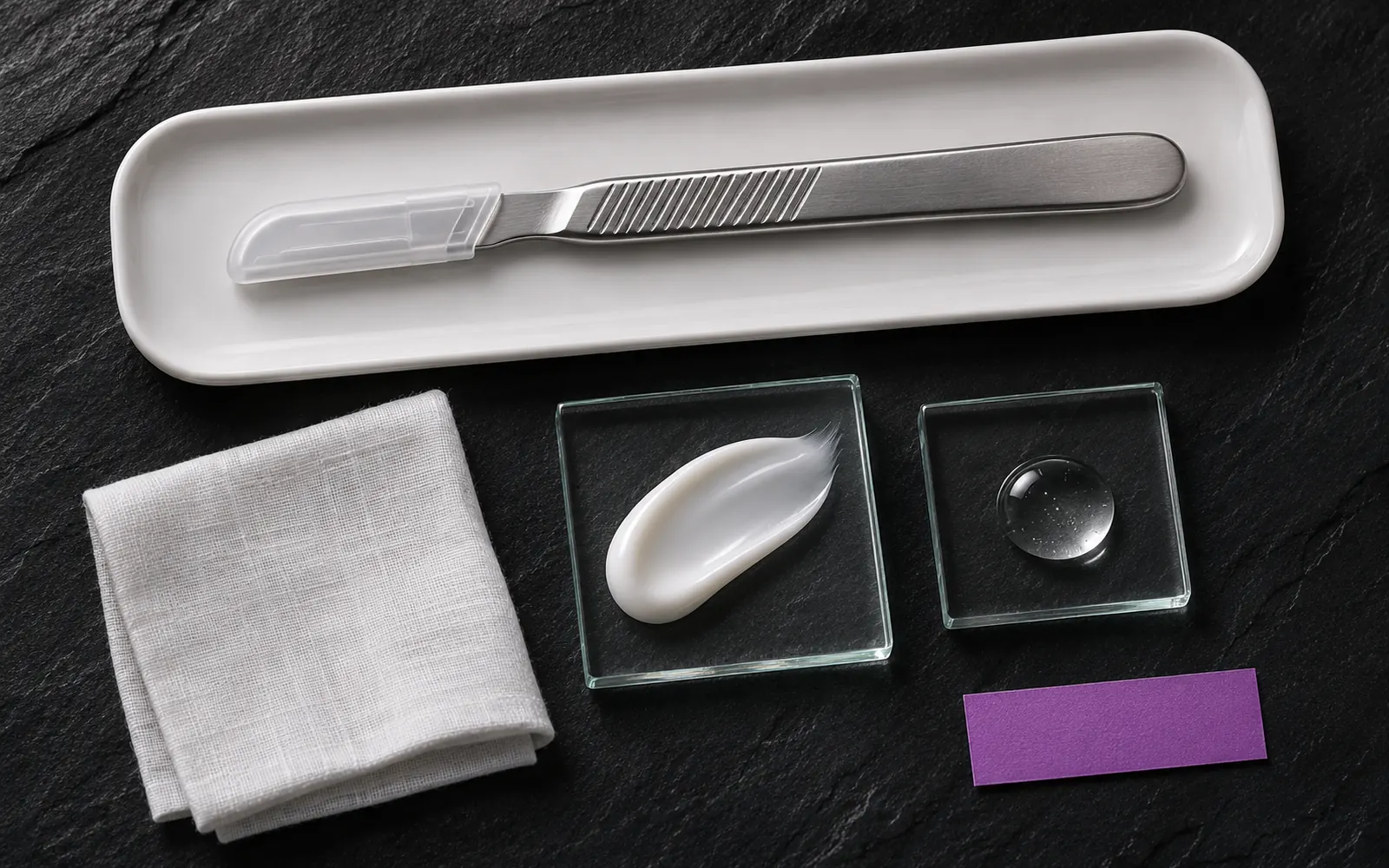
Capped dermaplaning-style tool with linen, moisturizer and water textures

Dermaplaning and Your Skin-Care Shelf: What to Ask First

LaserTouch MD · Precision Journal · Dermaplaning

Dermaplaning and Your Skin-Care Shelf: What to Ask First

Your cleanser is only part of the story. Retinoids, acids, acne products, scrubs and recent treatments can all change the conversation before surface exfoliation.
LaserTouch MD editorial team · November 4, 2026

Capped dermaplaning-style tool with linen, moisturizer and water textures
Illustrative editorial still life. The unused, capped tool is not identified as LaserTouch MD’s exact equipment.

A dermaplaning consultation becomes more useful when the conversation starts before the blade. The products on your bathroom shelf—and the treatments your skin has recently had—help explain how much exfoliation your routine already includes.

LaserTouch MD’s current dermaplaning page describes the service as surface exfoliation and removal of fine facial hair. It also advises discussing sensitivity, active breakouts, prescriptions and recent treatments before deciding whether the service fits. That makes a quick routine map more useful than trying to memorize every ingredient during the appointment.

Build a four-part routine map

Prescription products

List prescribed retinoids, acne medications and other topical treatments. Include the name, where you use it and how often. Do not stop a prescription without direction from the appropriate prescriber.

Turnover and acne actives

Note retinol, alpha- or beta-hydroxy acids, benzoyl peroxide and other products that can increase dryness, peeling or sensitivity.

Physical exfoliation

Include scrubs, cleansing brushes, at-home blades, waxing and other hair-removal methods. “Gentle” on a label does not reveal how your skin responds when methods are combined.

Recovery basics

Bring the cleanser, moisturizer and sunscreen you actually use. These are the products you may rely on while your routine is simplified after treatment.

Why there is no universal pause list

The American Academy of Dermatology notes that prescription retinoids and common products containing retinol or benzoyl peroxide can make skin more sensitive or prone to peeling. It also cautions that overly aggressive exfoliation can lead to redness and irritation, and that the right method depends on skin type and the products already in use.

That does not create one stop-and-restart schedule for every person. Product strength, frequency, skin condition, the treatment area and other recent procedures all matter. The safer question is specific: “Which exact products should I pause, who should direct that change, and what sign tells me my skin is ready to restart?”

Seven questions worth bringing

  1. Is my skin calm enough for dermaplaning today?
  2. Which items in my routine increase exfoliation, dryness or sensitivity?
  3. Are any of my products prescriptions that require instructions from my prescriber?
  4. Should this visit be separated from a peel, facial, waxing, laser treatment or microneedling?
  5. What gentle cleanser, moisturizer and sunscreen should I use afterward?
  6. When should I restart each active product based on how my skin responds?
  7. What redness, irritation, swelling or other change should prompt a call?

Know when the conversation may become a postponement

The clinic’s current page states that dermaplaning may not be appropriate for inflamed acne, active infection or already-irritated skin. Temporary redness or irritation can occur, and possible risks include cuts, infection, scarring and pigment changes. A 2011 systematic review also found the evidence base for dermaplaning was limited and poorly documented, so realistic expectations matter.

A thoughtful visit may end with a treatment, a simplified routine or a decision to wait. Each can be a useful outcome when the goal is comfortable, well-timed care rather than the maximum possible exfoliation.

Bring your shelf to the conversation.

Photograph the front labels of your current products, note how often you use them and bring your recent-treatment dates to a Bentonville appointment.

Explore Dermaplane booking
Call 479-268-4573

Sources: LaserTouch MD: Dermaplaning; American Academy of Dermatology: How to safely exfoliate at home; Pryor et al., systematic review of dermaplaning evidence (PMID 21533984).


Weekly routine board with sleep, movement, hydration, meals and appointment cards

When Your Goals Change: Give Your Longevity Plan a Useful Reset

LaserTouch MD · Precision Journal · Longevity 365

When Your Goals Change: Give Your Longevity Plan a Useful Reset

A personal plan should still make sense when your schedule, symptoms or priorities shift. Use a simple review to decide what to keep, what to discuss and what can wait.

LaserTouch MD editorial team · November 3, 2026

Weekly routine board with sleep, movement, hydration, meals and appointment cards

The plan that fit in January may feel crowded by November. Work changes, sleep changes, symptoms change—and sometimes a goal simply stops being the most important one. That does not mean the plan failed. It means the plan needs a useful review.

LaserTouch MD’s Longevity 365 roadmap is organized around flexible focuses and review points rather than one fixed sequence for everyone. That makes a reset practical: look at what is helping, name what has changed and bring the open questions to an appropriate follow-up.

Start with three decisions: keep, change or pause

Keep

Continue the routines that are useful, tolerable and realistic in your current week. Consistency is often more informative than adding another task.

Change

Flag the parts that no longer fit, produce questions or feel difficult to sustain. “Change” means discuss and reassess—not adjust a prescription on your own.

Pause

Set aside lower-priority ideas until the purpose, evidence, timing and personal fit are clearer. A shorter plan can be easier to evaluate.

Use one weekly board, not a second job

A useful routine board is small enough to scan in a minute. It should help you remember patterns without turning ordinary life into constant self-monitoring. Try five simple rows:

  • Sleep: note a consistent bedtime window or the nights that felt meaningfully different.
  • Movement: record the activity you actually completed, including walking, strength work or recovery days.
  • Meals and hydration: track one relevant habit rather than every bite or ounce.
  • Symptoms and energy: capture a brief pattern, including timing and what was happening around it.
  • Appointment questions: keep a running list so concerns do not disappear between visits.

The Centers for Disease Control and Prevention describes goal setting, problem-solving and progress tracking as practical behavior-change tools. The aim is to learn what works in real life, then adapt the plan to the person—not to collect a perfect streak.

Bring the trend, not a verdict

A week or two of notes can help you describe a pattern, but it cannot diagnose the reason for fatigue, sleep disruption, weight change or another symptom. Bring the observation in plain language: what changed, when it began, how often it happens and how it affects daily life. Include current medications and supplements, recent health changes and relevant records.

Five questions can keep the review focused:

  1. Which goal matters most to me now?
  2. What still feels useful and sustainable?
  3. What became difficult, unclear or less relevant?
  4. What needs a measurement, medical evaluation or follow-up?
  5. What can be simplified until the next review?

A better reset is specific and modest

A strong next step might be one adjusted routine, one question for follow-up and one date to review again. Results and recommendations vary, and Longevity 365 does not replace primary care, preventive screening, specialist care or urgent evaluation. Its value is in helping organize the conversation around your actual priorities.

For people in Bentonville, Rogers and nearby Northwest Arkansas communities, the next appointment can begin with a simple sentence: “Here is what changed, here is what I want to keep, and here is what I need help deciding.”

Reset the plan around what matters now.

Bring your weekly notes and your top questions to a Longevity 365 consultation.

Book a consultation
Call 479-268-4573

Sources: LaserTouch MD: Longevity 365; CDC: Strategies for Individual Supports; CDC: 3 Steps to Building a Healthy Habit.

LaserTouch MD November 12 TOX party: Xeomin $10, Letybo $11, Botox $12 per unit, and $100 off Obagi ChIQ and MagIQ fillers.

Let’s Tox! November 12 In-Clinic Party in Bentonville

LaserTouch MD November 12 TOX party offers

Let’s Tox! Join LaserTouch MD in Bentonville on Thursday, November 12, 2026, for our in-clinic TOX party. The event runs from 10 AM to 5 PM Central Time. Bring a friend, enjoy prizes, and save on your appointment.

Save $2 per unit on TOX

  • Xeomin: $10 per unit — regularly $12.
  • Letybo: $11 per unit — regularly $13.
  • Botox: $12 per unit — regularly $14.

$100 off Obagi fillers

Receive $100 off Obagi ChIQ or MagIQ filler during the November 12 event. Your consultation will help determine which treatment fits your goals.

Reserve your appointment

Book your November 12 appointment here, or call 479-268-4573.

LaserTouch MD
800 SE Walton Blvd, Suite 12
Bentonville, AR

November 12 offers only. Treatment eligibility is determined at consultation. Results and treatment needs vary.

Open progress journal, measuring tape and clothed dress-form mannequin with orchid accents

Body Contouring Without the Scale: Build a Progress Scorecard

The Precision Journal · Body Contouring

Body Contouring Without the Scale: Build a Progress Scorecard

A useful PHYSIQ goal is specific enough to review later. Choose one area, decide what evidence will matter, and set the review point before the first appointment—not after you start searching for a change.

Open progress journal, measuring tape and clothed dress-form mannequin with orchid accents
Original editorial still life. The clothed dress form is not a patient, and the image does not represent a treatment result.

Body contouring and weight loss answer different questions. The U.S. Food and Drug Administration says non-invasive body contouring is not intended to treat obesity or produce the health benefits of weight loss. LaserTouch MD makes the same distinction on its current PHYSIQ body-sculpting page.

That means the bathroom scale is a poor primary scorecard for a localized cosmetic treatment. A more useful starting question is: What would a meaningful, observable change in this one area look like to me?

A three-part progress scorecard

01

One defined area

Name the exact area you want assessed. “My lower abdomen in fitted clothing” is clearer than “change my whole body.” The consultation can determine whether the concern fits the available treatment.

02

Consistent evidence

Choose one or two repeatable records: photographs in the same clothing and position, an optional circumference measurement at the same landmark, or notes about how one garment fits.

03

A scheduled review

Ask when the team recommends reassessment. Reviewing at a planned milestone is more useful than checking from a different angle every day or judging a series after one visit.

Keep the method steady.

If you use photos, keep the lighting, camera height, distance, posture and clothing consistent. If you use a tape, record the same body landmark and similar conditions each time. Small changes in placement, hydration, posture and time of day can make a casual comparison misleading.

Your records are optional and private. Ask the clinic what documentation it uses and how images or measurements are stored before consenting to clinical photography.

Know which PHYSIQ conversation you are having

LaserTouch MD’s public page currently describes its PHYSIQ service as combining deep heat with electrical muscle stimulation. The clinic page does not identify the system as PHYSIQ 360, so specifications for that newer laser-based model should not be assumed to apply. Ask the team to confirm the exact device and applicators used at your appointment.

The FDA’s 2020 clearance summary for the original PHYSIQ identifies it as a prescription powered muscle stimulator with EMS and TENS modes. Its listed EMS uses include muscle re-education, relaxation of muscle spasms and increased local blood circulation. A 510(k) clearance is device- and indication-specific; it is not a guarantee of a cosmetic result.

Bring these five decisions to the consultation

  • Area: Which single area do you want assessed first?
  • Outcome: Are you interested in contour, muscle engagement, the fit of clothing or another defined cosmetic concern?
  • Evidence: Which repeatable record will you use, if any?
  • Timeline: When will the clinician review your response and decide whether the plan still fits?
  • Stopping rule: What would lead to pausing, changing the plan or choosing another approach?
Safety belongs in the scorecard, too. Before treatment, share medications, pregnancy or breastfeeding, implanted electronic devices, metal, an IUD, surgery, scars, tattoos, altered sensation and skin problems in the proposed area. FDA guidance notes that body-contouring technologies have different limitations and risks; possible effects across devices include discomfort, redness, swelling, bruising and technology-specific complications. Ask which risks apply to the exact device and settings proposed for you.

A result still needs context

Not everyone responds to non-invasive body contouring, and any effect may be temporary or require more than one appointment. A careful scorecard cannot promise success. It can make the decision clearer: you and the provider agree on the area, the evidence and the review point before a series begins.

Start with one measurable question

Explore LaserTouch MD’s current PHYSIQ service, then book the consultation category before choosing a package. Appointments take place in Bentonville for guests from Rogers and across Northwest Arkansas.

Book a PHYSIQ consultation Call 479-268-4573

Sources checked November 2, 2026: LaserTouch MD PHYSIQ Body Sculpting; FDA: Non-Invasive Body Contouring Technologies; FDA 510(k) K202079: PHYSIQ. General education only; individual suitability, risks and results require evaluation.
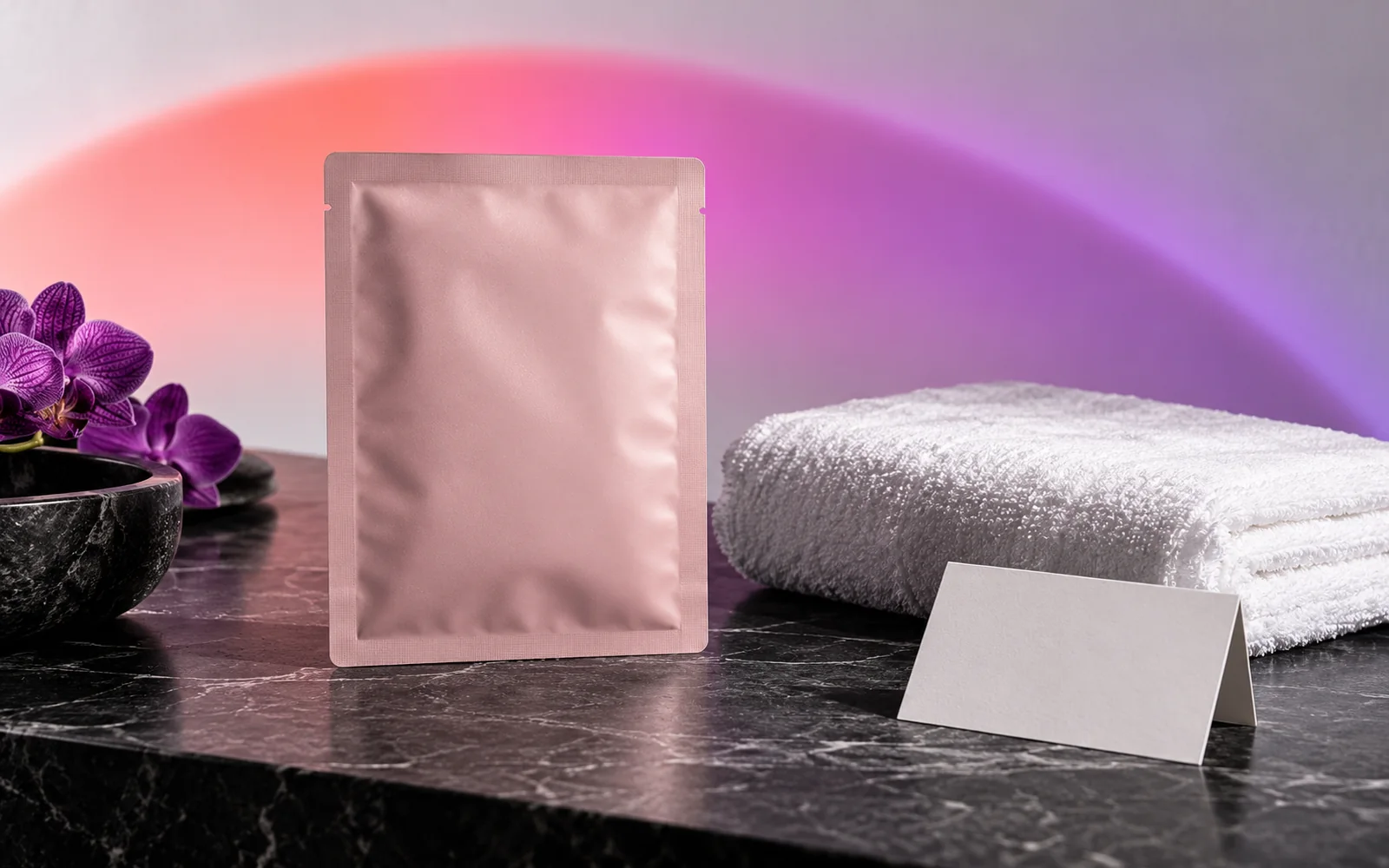
Unbranded pink mask pouch, white spa towel and orchid-red light arc

PDRN Pink Collagen and Red Light: Inside the HydroSpa Finish

The Precision Journal · HydroSpa

PDRN Pink Collagen and Red Light: Inside the HydroSpa Finish

The $145 Diamond PDRN Pink Collagen Hydrospa Facial adds two named finishing moments to the classic facial: a PDRN Pink Collagen Mask and red-light therapy. Here is what those names do—and do not—tell you before you book.

Unbranded pink mask pouch, white spa towel and orchid-red light arc
Original editorial illustration of the finishing ritual. The pouch is unbranded, the light arc is symbolic, and no clinic device or treatment result is shown.

The useful distinction starts with the service name. LaserTouch MD lists the Diamond Hydrospa Facial at $125 and the Diamond PDRN Pink Collagen Hydrospa Facial at $145. The second option includes the classic facial care, the named mask, red-light therapy and a personalized finish. It is a separate service, rather than an automatic add-on to every HydroSpa appointment.

This story narrows in on that finish. The earlier Journal guide follows the full Diamond Hydrospa visit from consultation through diamond-tip exfoliation, pore-focused care when appropriate, hydration and aftercare. Today’s question is simpler: what should you understand before the pink mask and light steps begin?

Three moments in the finish

01

Confirm the service

Ask the team to confirm the exact facial name on your appointment. This prevents the $125 classic facial and the $145 pink-collagen option from being treated as interchangeable.

02

Meet the mask

The PDRN Pink Collagen Mask is a topical sheet-mask step. Share allergies, sensitivity and ingredient questions before it is placed on your skin.

03

Pause for red light

Red-light therapy is included in this version of the facial. The provider should confirm suitability and explain the session being used that day.

“PDRN” is part of the name—not a promise.

Here, PDRN identifies the mask and the clinic’s exact service name. It should not be read as a guarantee of collagen production, skin repair or a particular result, and it does not make the facial an injectable PDRN treatment.

The current U.S. DailyMed label for a product named PDRN Pink Collagen Mask lists topical ingredients, directions and warnings. That label is useful for product-identification and ingredient questions, but it does not establish the clinic’s in-room timing or predict your response. Ask which exact product is being used at your appointment and follow the provider’s instructions.

What the red-light step still leaves to ask

“Red light” describes a category, not a complete treatment specification. LaserTouch MD’s public page does not identify the dome’s current manufacturer, model, wavelength or dose. For that reason, this article does not borrow specifications from a different device or make device-specific benefit claims.

Your appointment is the right place to clarify the equipment and protocol. Share any history of light sensitivity, eye concerns, medications or skincare that may increase sensitivity, and recent peels, lasers or microneedling. The provider can decide whether to adapt, postpone or omit a step.

Five questions that make the finish more useful

  1. Which exact mask product will be used, and may I review the ingredient list?
  2. How long will the mask remain on during this facial?
  3. Which red-light device and settings are planned today?
  4. What eye protection and comfort checks will be used?
  5. When should I resume active skincare or schedule another procedure?
$125

Diamond Hydrospa Facial

  • Professional cleansing
  • Diamond-tip surface exfoliation
  • Pore-focused care when appropriate
  • Hydrating skincare and finishing care
$145

Diamond PDRN Pink Collagen Hydrospa Facial

  • Diamond Hydrospa Facial care
  • PDRN Pink Collagen Mask
  • Red-light therapy
  • Personalized finish and aftercare guidance

The Skin & Scalp Club’s published $99 monthly facial choice is the standard Diamond Hydrospa Facial. The pink-collagen facial is a separate option; ask the clinic for the current member upgrade price rather than assuming one.

Choose your HydroSpa finish

Review the current HydroSpa facial options, then book the exact service you want or call LaserTouch MD with your product and timing questions.

Find a facial appointment Call 479-268-4573

Sources checked November 1, 2026: LaserTouch MD HydroSpa Facials; DailyMed PDRN Pink Collagen Mask label; current LaserTouch MD Skin & Scalp Club brochure. Service details and product use can change; confirm them at the appointment.
Faceless Head Spa waterfall halo rinsing dark hair with a cobalt towel

Inside the Scalp Retreat: Steam, Waterfall Rinses and Ten Steps

Inside the Scalp Retreat: Steam, Waterfall Rinses and Ten Steps

The Precision Journal · Head Spa

The Scalp Retreat is designed as a sequence—not a quick shampoo. Here is how aroma, steam, three waterfall-halo rinses and finishing care fit into one 60-minute appointment.

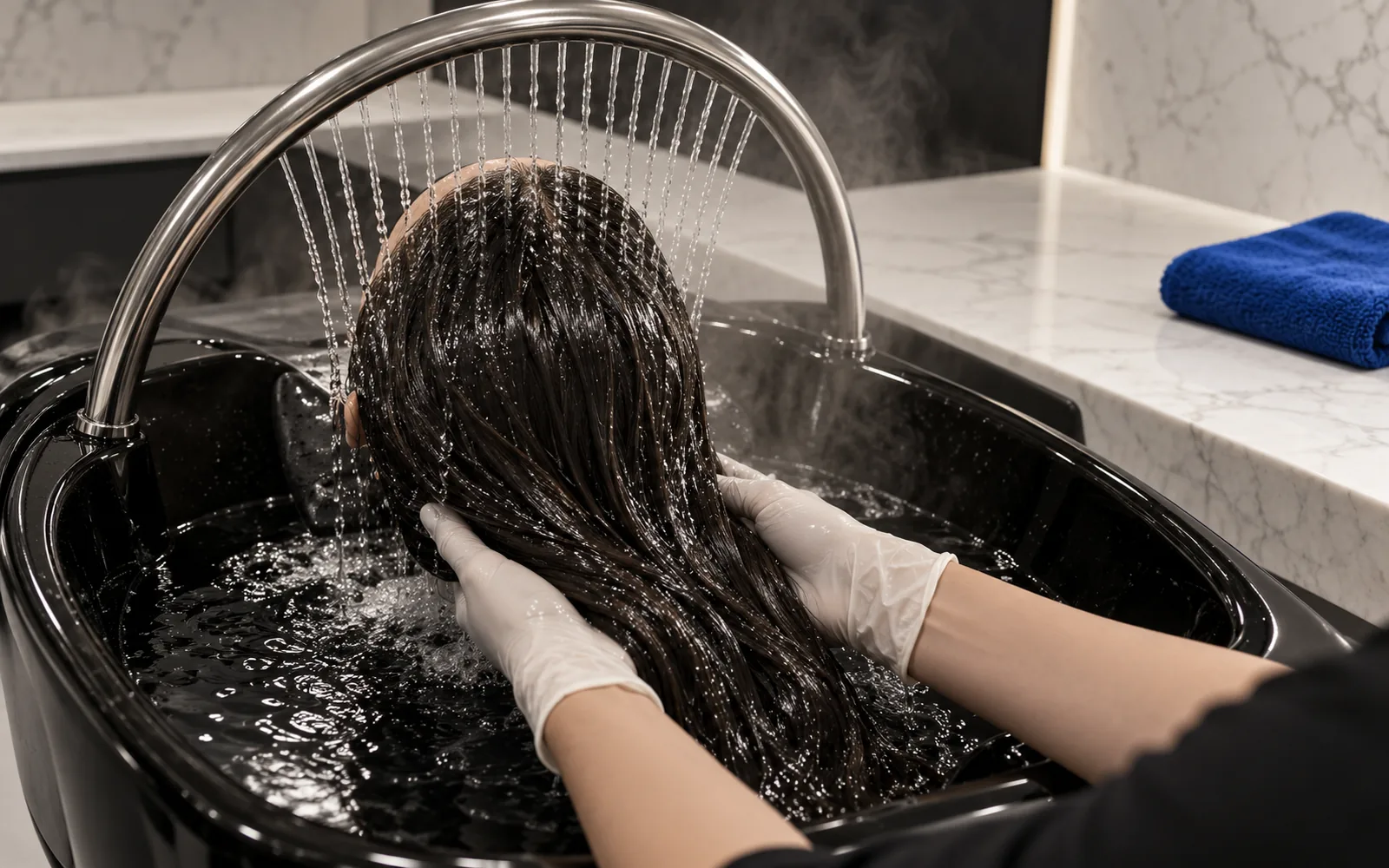
Faceless Head Spa waterfall halo rinsing dark hair with a cobalt towel
Original illustrative photograph of a waterfall-halo rinse. It does not show a LaserTouch MD guest or treatment result.

Why the order matters

A Head Spa feels unhurried because each step has a job. The early part sets the sensory tone and prepares the scalp. Cleansing and conditioning are separated by rinses so the ritual moves forward cleanly. The final steps return the focus to scalp and hair care before the blow-dry finish.

At LaserTouch MD, the current Scalp Retreat is a team-based cosmetic scalp, hair-care and relaxation service. It is not presented as a diagnosis or treatment for hair loss or a medical scalp condition. If you have an unexplained scalp concern, active irritation or open sores, contact the clinic before booking.

Three waterfall moments: the halo rinse appears after exfoliation, after deep cleansing and after the conditioning mask. It is a transition between stages, not a stand-alone treatment claim.

The ten-step Scalp Retreat

  1. Choose your aroma

    Select the scent direction that fits the visit, or ask for no added scent and share fragrance sensitivities.

  2. Steam and oil scalp massage

    Warm steam accompanies the service’s antioxidant-oil scalp-massage step.

  3. Scalp exfoliation salt scrub

    A salt scrub focuses on surface buildup as part of the cosmetic scalp-care sequence.

  4. Waterfall halo rinse

    The first halo rinse clears the exfoliation step before shampoo.

  5. Deep-cleansing shampoo

    Cleansing follows the scrub and first rinse rather than beginning the appointment.

  6. Waterfall halo rinse

    The second rinse removes shampoo before the conditioning stage.

  7. Conditioning mask with steam

    A deep-conditioning hair mask and steam shift the ritual from cleansing to conditioning.

  8. Waterfall halo rinse

    The third halo rinse completes the mask stage.

  9. Peptide serum scalp nutrients

    The team applies the service’s finishing scalp-serum step after the final rinse.

  10. Blow-dry finish

    The appointment closes with a blow-dry finish; discuss specific styling requests before the visit.

What to tell the team before you settle in

Your hair

Mention texture, extensions, protective styles, recent color and chemical services.

Your scalp

Share sensitivity, allergies, active irritation, open areas or unexplained concerns.

Your comfort

Discuss fragrance, heat, neck positioning and the bed’s gentle leg-compression feature.

The team can then discuss suitability, preparation and reasonable adaptations. That conversation also helps prevent a relaxing appointment from becoming a surprise—for example, if extensions change how the hair can be rinsed or dried.

Five useful booking questions

  • Should I wash my hair before the appointment?
  • Are my extensions, protective style or recent color service compatible?
  • Can I request an unscented experience?
  • What is included in the blow-dry finish?
  • Is the heated bed or gentle leg compression appropriate for my comfort needs?

The Scalp Retreat is currently $115 as a regular appointment. The Skin & Scalp Club offers either one Scalp Retreat Head Spa or one Diamond Hydrospa Facial for $99 per month, with the option to choose both for $198. Review membership terms, scheduling and cancellation before enrolling.

Book your Bentonville retreat

Explore the current Scalp Retreat Head Spa, then use the dedicated Head Spa category in online booking or call LaserTouch MD with your preparation questions.

Find a Head Spa appointment
Call 479-268-4573

Service details checked October 31, 2026:
LaserTouch MD Scalp Retreat Head Spa,
Skin & Scalp Club, and the current clinic Skin & Scalp Club brochure.
Faceless event-planning still life with invitation, clock, towel, skincare and cobalt ribbon

Dermaplaning Before a Special Event: Build in a Skin Buffer

Dermaplaning Before a Special Event: Build in a Skin Buffer

The Precision Journal · Event planning

A wedding, holiday party or photo session can make “when should I book?” feel urgent. The useful answer starts with your skin history—not a universal countdown.

Faceless event-planning still life with invitation, clock, towel, skincare and cobalt ribbon
Illustrative event-planning still life. It does not show a patient, treatment or result.

Why timing is personal

Dermaplaning works at the surface, removing fine facial hair and surface dead skin cells with a blade. LaserTouch MD offers it as a standalone visit or as part of a broader skin-care plan. That does not mean every complexion will look or feel the same immediately afterward.

Temporary redness or irritation can occur, and cuts, infection, scarring or pigment changes are possible. Active acne, infection or already-irritated skin may change whether the appointment should happen at all. A published systematic review also found the research supporting dermaplaning was limited and poorly documented, which is a good reason to keep expectations measured rather than promise an “instant glow.”

The best event-timing question:

“Based on my skin, recent treatments and products, how much buffer would you want between dermaplaning and my event?”

A four-step event plan

  1. Share the real date

    Tell the team whether the event includes professional makeup, outdoor time, travel or photographs. Also say whether this would be your first dermaplaning visit.

  2. Review what your skin has already been through

    Bring up recent peels, facials, laser treatments, microneedling, waxing, sun exposure, breakouts, cold sores and irritation. More exfoliation is not automatically better.

  3. Ask for your buffer

    If this is your first appointment or your skin is reactive, avoid relying on a last-minute slot. Ask whether at least a week—or more—is appropriate for you. That is a planning question, not a guarantee that everyone needs the same interval.

  4. Protect the recovery window

    Follow the clinic’s instructions for gentle cleansing, moisturizing, sun protection and restarting exfoliating products. Do not add a new peel, scrub or strong active simply because the event is close.

Standalone visit or combination treatment?

Standalone may make sense when

You want to see how your skin responds, your schedule is tight, or you are already using products or treatments that affect sensitivity.

Coordination matters when

You are considering a facial, peel, waxing or another procedure near the same date. Ask the team to choose the sequence and recovery space.

LaserTouch’s current dermaplaning and chemical-peel pages both advise asking before combining services. That keeps the decision focused on skin comfort and tolerance rather than squeezing the most treatments into one appointment.

Bring these questions

  • Is my skin calm enough for dermaplaning today?
  • Which products should I pause, and when can I restart them?
  • Should dermaplaning be separate from my facial or peel?
  • What temporary redness, sensitivity or texture changes should I expect?
  • When is makeup reasonable for my skin?
  • What symptoms should prompt a call to the clinic?

One common worry can be set aside: trimming fine hair at the surface does not change the follicle, so it does not make that hair grow back thicker. Dermaplaning is temporary surface hair removal, not a laser hair-removal program.

Plan your Bentonville appointment

Review LaserTouch MD’s current dermaplaning information, then book through the current Esthetics menu or call with your event date and questions.

Explore esthetics booking
Call 479-268-4573

Sources reviewed October 30, 2026:
LaserTouch MD dermaplaning;
LaserTouch MD chemical peels;
Cleveland Clinic dermaplaning overview; and
a systematic review of dermaplaning evidence (PMID: 21533984).
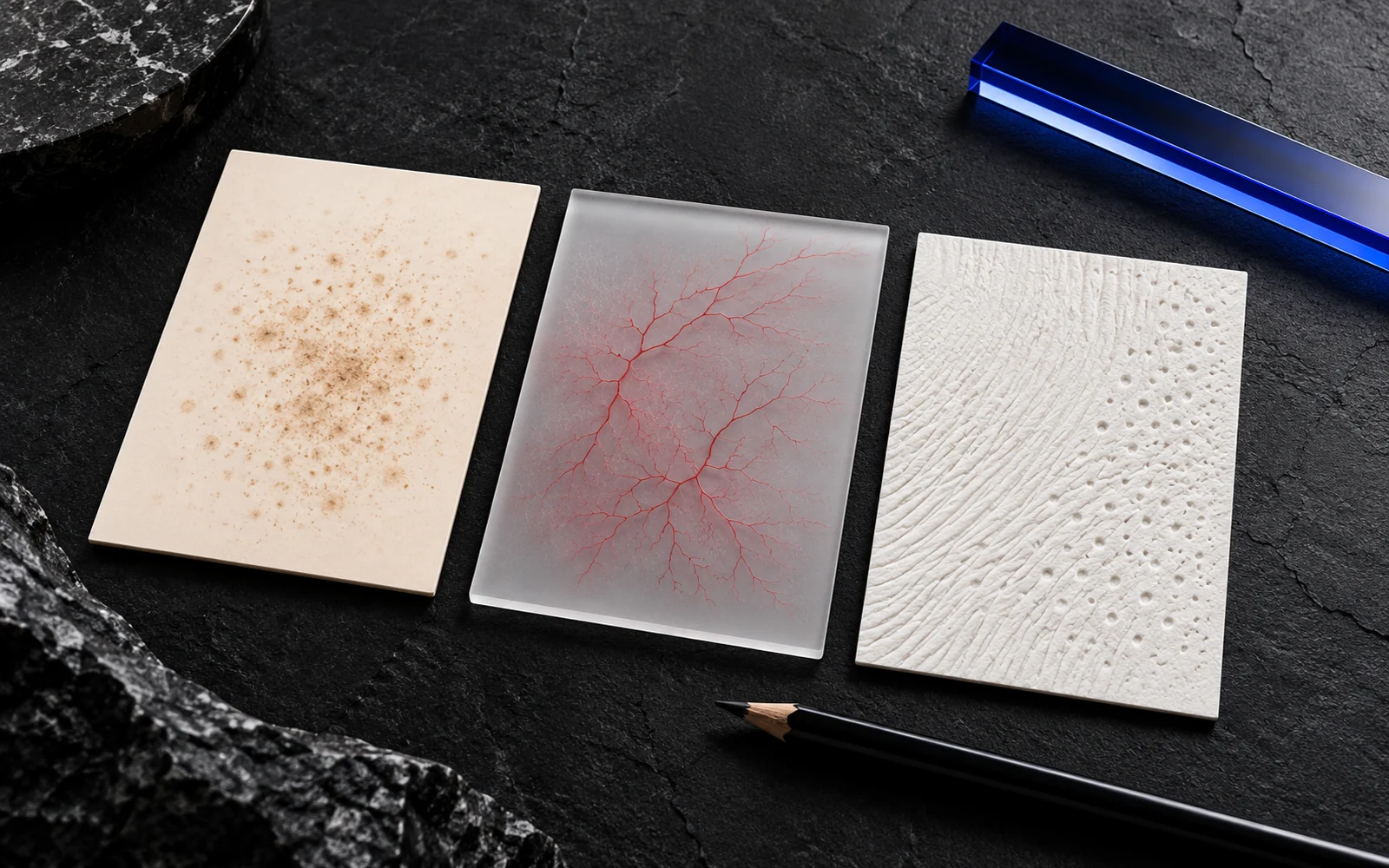
Illustrative consultation cards representing uneven tone, visible redness and skin texture

Tone, Redness or Texture? Choosing the Right Laser Consultation

Tone, Redness or Texture? Choosing the Right Laser Consultation

The Precision Journal · IPL & laser consultation

“Laser” is a category, not a complete treatment plan. A useful consultation starts by naming what you see—uneven tone, visible redness or texture—then matching that concern to the right technology, settings and recovery plan.

Illustrative consultation cards representing uneven tone, visible redness and skin texture
Illustrative tone, redness and texture still life. This is not a device, patient result or LaserTouch protocol.

Start with the concern, not a treatment name

LaserTouch MD currently lists IPL/BBL and laser skin treatments among its aesthetic services. Those names cover different tools and targets. Before choosing one, describe the change you want to discuss, where it appears, how long it has been present and whether it changes with sun, heat, exercise or skincare.

Tone

Bring up freckles, sun spots or areas of uneven brown pigment. Ask whether the spot first needs medical evaluation and whether your skin’s recent sun exposure or pigment history changes the plan.

Redness

Explain whether you see a broad flush, individual visible vessels or redness that comes with breakouts. These are not automatically the same target, even when they appear in one area.

Texture

Be specific about roughness, fine lines, scars or pores. Texture may lead to a discussion of resurfacing or microneedling rather than IPL, with a different recovery window and risk profile.

Why the exact handpiece matters

A multi-application platform can offer several distinct energy types. Rohrer Aesthetics’ current Spectrum materials, for example, describe separate IPL, Er:YAG, Nd:YAG, diode and other handpieces. Its formal indications distinguish IPL applications for certain vascular and benign pigmented lesions from Er:YAG applications involving superficial ablation and dermabrasion. The label also ties IPL filters and skin-type ranges to specific uses.

That distinction is the practical point: a platform name does not make every handpiece suitable for every concern. Ask which exact device and applicator are proposed for you, what that choice is intended to target, and whether the recommendation follows the device’s labeled use. LaserTouch’s current public service page does not identify the exact platform or handpiece for every laser service, so confirm those details during your visit.

A photo can help you describe a pattern, but it cannot replace an in-person assessment.

Changing, irregular, bleeding or otherwise concerning lesions should be evaluated medically rather than treated as a routine cosmetic pigment concern.

Bring this checklist to your consultation

  • Your priority: tone, redness or texture—and the one change that matters most.
  • Your skin history: tanning, recent sun exposure, pigment changes after irritation, scarring and cold sores.
  • Your current routine: prescriptions, supplements, photosensitizing medicines, retinoids, acids and recent procedures.
  • The proposed tool: exact device, handpiece or filter, intended target and why it fits your skin.
  • Comfort and protection: what the treatment feels like, what eye protection is used and how the area is prepared.
  • Recovery: expected redness or swelling, sun precautions, skincare changes and the symptoms that should prompt a call.
  • Risk and alternatives: possible burns, blisters, pigment change or scarring, plus reasonable options if light or laser is not the best match.
  • How progress is judged: photography, review timing and when another session would—or would not—make sense.

Set one outcome you can evaluate

A clear goal makes follow-up more useful. “I want fewer visible brown spots on my cheeks” or “I want to understand what is causing this redness” gives the clinician something concrete to assess. Results and recovery vary with the condition, device, settings, skin type and aftercare, so the consultation should define what improvement is realistic and how it will be measured.

Plan your Northwest Arkansas consultation

Review LaserTouch MD’s current laser treatment information, then bring your concern and questions to a personalized consultation in Bentonville.

Book a consultation
Call 479-268-4573

Sources reviewed October 29, 2026:
LaserTouch MD laser treatments;
Rohrer Aesthetics indications for use;
Rohrer Spectrum platform overview; and a
randomized split-face comparison of IPL and pulsed-dye laser for facial telangiectasias (PMID: 20205349).
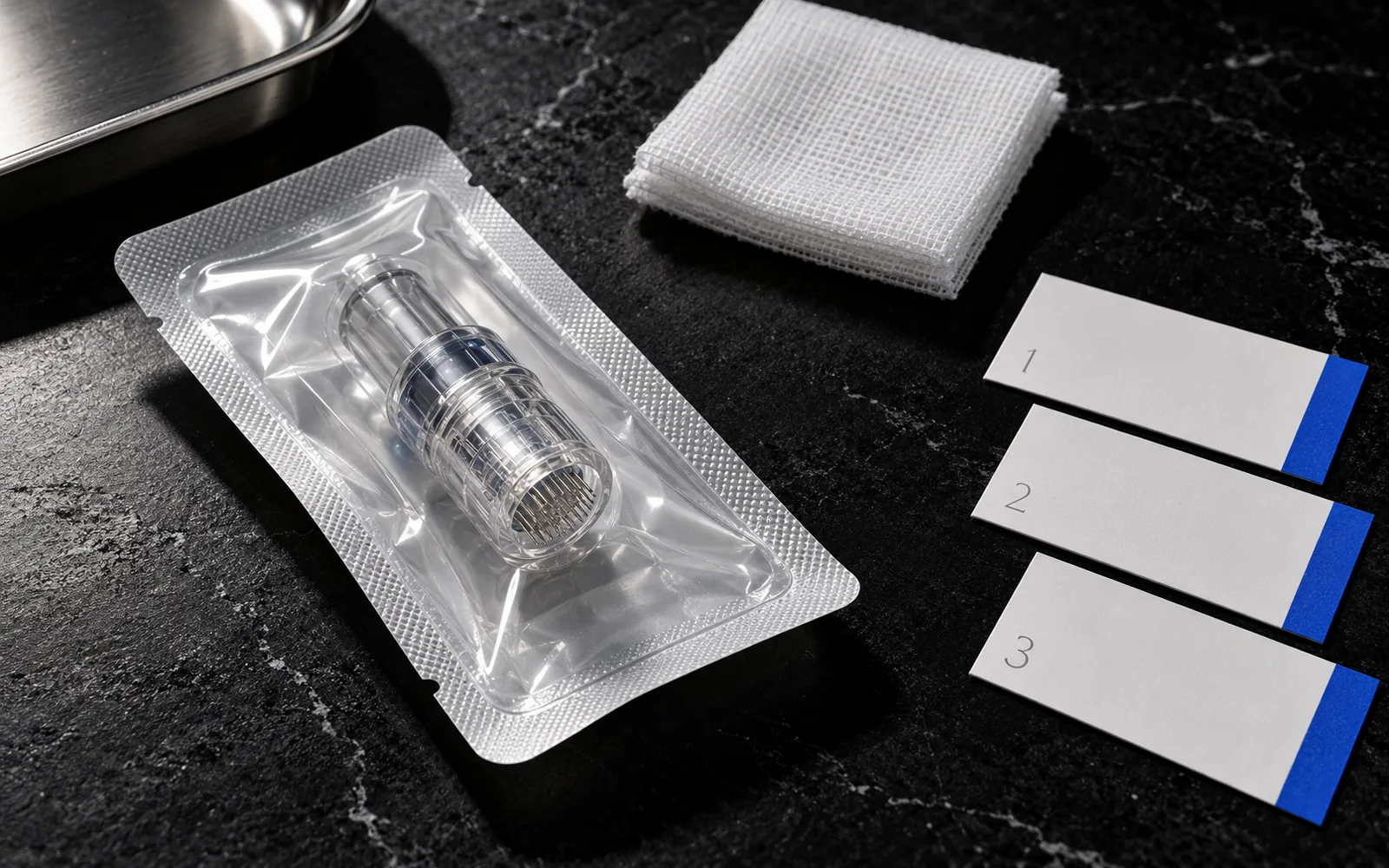
Illustrative sealed single-use microneedling cartridge with gauze and three cobalt-accented series cards

Planning a Microneedling Series: Questions About PRP and VAMP

Precision Journal · Microneedling

Planning a Microneedling Series: Questions About PRP and VAMP

A useful series plan names the concern, the device, the interval and the review point—then treats every add-on as a separate decision with its own evidence and instructions.

Illustrative sealed single-use microneedling cartridge with gauze and three cobalt-accented series cards
Illustrative sterile-tip still life. It is not LaserTouch MD’s device, a patient treatment or a depiction of the clinic’s protocol.

Build the series backward from the goal

Three visits should not mean three identical decisions.

LaserTouch MD currently offers regular microneedling and invites patients to discuss PRP and VAMP options. A series can make sense because skin response is assessed over time, but “three sessions” is not a universal prescription. The treatment area, needle depth, interval, recovery and decision to continue should come from an individual assessment.

01 · PLAN

Name one concern and record a realistic starting point.

02 · FIRST VISIT

Confirm the device, fresh cartridge, depth and aftercare.

03 · REVIEW

Separate expected redness from a settled response.

04 · NEXT STEP

Continue, adjust, pause or choose another option.

Add-ons are different materials

PRP and VAMP do not answer the same question.

PRP starts with your blood.

Platelet-rich plasma is prepared from a sample of the patient’s own blood. Research on acne scars suggests that adding PRP to microneedling may improve some outcomes compared with microneedling alone, but protocols and outcome measures vary. A 2021 meta-analysis included 14 controlled studies and 472 patients; it supports a useful conversation, not a promise for every concern or skin type.

Ask: How is the PRP prepared, how would it be used, and what evidence applies to my exact goal?

VAMP Advanced is a manufactured topical product.

Prollenium’s current product information describes VAMP Advanced as a topical, single-use formula containing PDRN, hyaluronic acid, vitamins, amino acids and minerals. It is not PRP, and the manufacturer says it must not be injected or used on cuts, burns, wounds or other compromised skin.

Ask: When would it be applied, what does the product labeling allow, and why is it being considered for me?

The timing question matters. Microneedling intentionally creates controlled punctures. VAMP labeling describes topical use and excludes compromised skin. That is why a clinician should explain the exact timing and application plan instead of treating “VAMP with microneedling” as a self-explanatory phrase.

A boundary worth knowing

Device clearance does not automatically cover the add-on.

The FDA has legally authorized specific microneedling devices for specific uses, including the appearance of facial acne scars, facial wrinkles and abdominal scars in adults 22 and older. Authorization is device- and indication-specific.

The FDA also states that microneedling devices are not approved for delivering cosmetics, topical medications, vitamin solutions, drugs or blood products such as PRP into the skin. That does not settle every provider discussion, but it does mean the provider should distinguish the microneedling procedure from the proposed product and explain what is supported, what is off label and what alternatives are available.

Common effects can include redness, tightness, itching, peeling, discomfort, bruising, bleeding and crusting. Less common risks include pigment changes, cold-sore reactivation and infection. A new single-use cartridge should be used for every patient and every session.

Bring this checklist

Seven questions for a clearer series plan.

  1. What exact concern are we trying to improve?
  2. Which device and sterile cartridge will be used?
  3. How will depth and interval be chosen for my skin?
  4. What will we review before scheduling the next visit?
  5. If PRP is proposed, how is it prepared and used?
  6. If VAMP is proposed, when is it applied and what do its instructions permit?
  7. Which symptoms should prompt a call or urgent care?

Share your medications and supplements, allergies, cold-sore history, tendency toward pigment changes, recent procedures, active skin conditions and prior reactions. Do not stop prescribed medication on your own. Follow the written preparation and aftercare plan for the exact treatment you receive.

Bentonville · Rogers · Northwest Arkansas

Start with the plan, then choose the add-on.

Explore LaserTouch MD’s current microneedling options, then bring your skin goal, treatment history and questions to a Bentonville consultation.

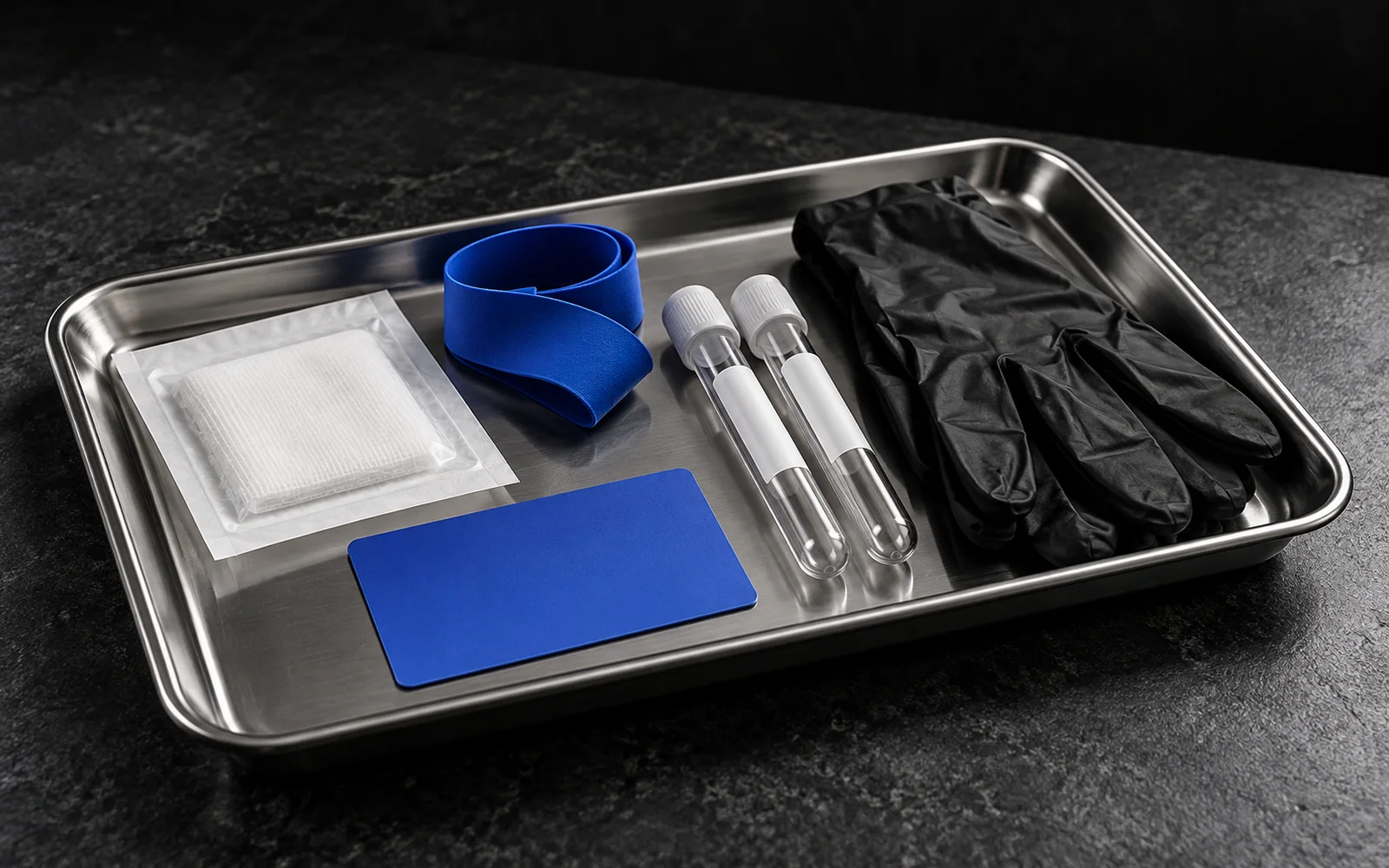
Clinical preparation tray with sterile gauze, a disposable tourniquet, two empty collection tubes and a cobalt appointment card

PRF BioFiller Questions: From Blood Draw to Follow-Up

Precision Journal · PRF BioFiller

PRF BioFiller Questions: From Blood Draw to Follow-Up

A useful consultation should explain the exact preparation, the goal it is meant to address and how you will judge the settled result—not just call it “natural filler.”

Clinical preparation tray with sterile gauze, a disposable tourniquet, two empty collection tubes and a cobalt appointment card
Illustrative preparation still life. It contains no blood, patient specimen or treatment product and does not show a clinic protocol.

PRF stands for platelet-rich fibrin, a blood-derived preparation discussed within regenerative aesthetics. “BioFiller” can refer to a processed plasma-based gel, while liquid injectable PRF is a different material. Processing methods vary, so findings about one preparation should not automatically be applied to every product called PRF or BioFiller.

That distinction matters because a consultation is not simply a choice between “natural” and “synthetic.” It is a decision about a specific concern, an exact preparation, an injection plan and a realistic review point.

BeforeDefine the concernSeparate hollowing, pigmentation, puffiness, fine texture and facial balance. One treatment will not address every cause.
DuringName the materialAsk whether the plan uses liquid PRF, a processed plasma gel or another blood-derived preparation—and how it is prepared.
AfterSet the review pointKnow what swelling and bruising may look like, when the appearance should be assessed and what would prompt an earlier call.

Preparation begins before the blood draw

Bring a current list of medications and supplements, previous injectable treatments, allergies, bleeding or clotting concerns, recent illness and active skin problems. Do not stop a prescribed medication on your own. Ask the treating clinician whether anything in your history changes the plan or recovery expectations.

If you proceed, the appointment includes a blood draw and preparation of the selected material before treatment. The exact equipment, processing steps and appointment length can differ. Ask which system and preparation are being used, who will perform each part of the visit and how sterile handling is maintained.

Purpose should be specific enough to evaluate

“Rejuvenation” is too broad to measure. A clearer goal might be improving the appearance of fine texture, discussing mild hollowing or evaluating facial balance. Under-eye concerns deserve special care because discoloration, puffiness, laxity and volume loss are different problems. A blood-derived option that fits one may not fit another.

PRF BioFiller is also not interchangeable with platelet-rich plasma or hyaluronic acid filler. The preparation, intended use, evidence, expected degree of change and risk profile should guide the decision. Ask what this option may reasonably do, what it is unlikely to change and which alternatives belong in the comparison.

How to read the evidence

A 2020 prospective study followed 11 healthy women who received three monthly injections of injectable PRF in several facial areas. At three months, researchers reported improvements in measured spots and pores and in several satisfaction scores; other skin measures showed numerical change. The study had no control group and used a specific liquid PRF process. It is useful early evidence, but it does not prove a predictable result, long-term durability or superiority for every BioFiller preparation.

Recovery and risk belong in the same plan

Bruising, swelling, tenderness and infection are possible. Early fullness may partly reflect swelling, so it should not be mistaken for the settled result. Ask how to care for the area, which activities or skincare to pause, and when to contact the clinic.

Blood-derived does not mean risk-free. Serious vascular complications, including irreversible vision loss, have been reported after cosmetic facial platelet-rich plasma injections. That evidence comes from PRP case reports rather than proof that every PRF preparation has the same risk, but it reinforces why facial injections require careful anatomy, sterile technique, informed consent and an emergency plan.

Seek emergency care for sudden vision changes, severe unusual pain, weakness, trouble speaking or other stroke-like symptoms during or after a facial injection.
Five questions to bring:

  • What exact preparation are you proposing?
  • Which concern is it intended to address—and what will it not change?
  • What evidence applies to this preparation and treatment area?
  • What recovery effects and urgent warning signs should I know?
  • When will we assess the settled result before considering anything more?

Start with the exact question.

LaserTouch MD offers PRF BioFiller consultations in Bentonville for clients from Rogers and across Northwest Arkansas. Choose the current Cosmetic Injection booking category and note that you want to discuss PRF BioFiller, or call with scheduling questions.

Book a BioFiller consultationCall 479-268-4573

Sources (accessed October 27, 2026):
LaserTouch MD PRF BioFiller service guide
Hassan, Quinlan & Ghanem, prospective i-PRF study (2020)
Karam et al., visual loss after facial PRP injection (2020)